Posts

Showing posts with the label The Omnivore's Dilemma

Pepsi Throwback

Image
On Saturday while picking up some weekend food at Food Lion I purchased a 12-pack of Pepsi Throwback. In case you've missed the 70's Soul Train themed commercials that have been running the past month, Throwback is a temporary formulation of Pepsi (and Mountain Dew) that uses regular sugar instead of HFCS ( high fructose corn syrup ). I've never been a fan of the high government subsidies of corn production so any move towards limiting the use of corn products is good news to me. Manufacturers use HFCS because it's cheap, and it's cheap because the government (ie taxpayers) keeps the price of corn artificially low with subsidies to the farming community, especially large agricultural giants like ConAgra and ADM. Ever since reading about the environmental and physiological problems associated with the use of HFCS in Michael Pollan's book The Omnivore's Dilemma I've wanted to limit my dietary intake of the stuff. But alas, my love of soda hasn't been...

Manoic and ancient diets

Image
There's an article today on Reuter's newswire about a South American volcano eruption around 1,400 years ago. According to the article there's a well preserved field of cultivated manoic buried beneath the lava flows. The article says that this is the first evidence that the nutritious crop was cultivated by the Mayans. That's manoic, aka cassava, over there on the left. According to Wiki , Cubans use it for IBS . Maybe I should try it. This keys into two books I've read in the past year. In Omnivore's Dilemma , Michael Pollan spends a third of the book discussing and trying to duplicate the diet of ancient peoples and Jared Diamond, in his book Collapse , focuses on how agriculture impacts the success and failure of current and ancient civilizations. This discovery of the manoic field helps explain how the Mayan civilization prospered in an area that was often getting sub-par rainfall. "We have long wondered what else the prehistoric Mayan people were g...

More thoughts about the Pollan book

Image
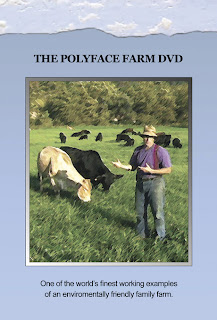
Micheal Pollan's book The Omnivore's Dilemma is one of those books that you keep on thinking about long after you finish reading it. I wrote a review of it a few days ago in case you're interested. The reason I bring this up is that today while driving past a number of cow pastures on my way to work---have I mentioned that I live in a very rural area?--I was thinking of Pollan's description of Polyface, a small self-sustaining farm in Virginia , and their methods of keeping cows. Joel Salatin, the owner of Polyface, doesn't just put cows out in a pasture, which is the common practice elsewhere. What they do at Polyface is only allow the cows in any given area for a short period of time and use light portable fences to keep them in that one area. The reason for this is that cows, not surprisingly, like to eat the grass that tastes the best to them. In fact they'll crop that type of grass right down to the ground which often kills the grass. Then the cows will m...

Michael Pollan's The Omnivore's Dilemma

Image
I finished reading The Omnivore's Dilemma last Saturday morning just before going to that Science Blogging Convention I posted about last Sunday. It's a book that is very difficult to put down. The book is well written which is no surprise since Michael Pollan has long been a contributing writer at the New York Times as well as a professor of journalism at UC Berkley. Pollan asks the question "What should we eat?" in this book and the answer occurs organically during the course of the book. By the time you've finished the last chapter you'll know the answer to that question and I doubt it'll be the same as before you started the book. In that sense The Omnivore's Dilemma is revolutionary. It will affect the way you look at food and change your world view of the morality of food and of the government agencies that have aided in making our food choices of today what they are. Is that a run on sentence? It felt rather long and breathless. First of all, l...

Omnivore's Dilemma

Image
I've finally started reading Michael Pollan's book The Omnivore's Dilemma. I've had it for over 6 months and am only getting started on it now. I'm only on page 57 and it's already gotten me pissed off multiple times as well as given me quite a few things to think about. For example, in 1919 a typical farmer in the USA would be able to support his family and 12 other people, producing on average 20 bushels of corn per acre. And at that time about one in four people living in the USA lived on a farm. Contrast that with today when there's only 2 million farmers yet those few produce most of the food that we need--and in many areas a lot more than we need. Each farmer now produces enough food for 129 people and each acre of land grows 200 bushels of corn. Each number about a 10 fold increase in less than 90 years. The reason for this change? Improved crops, of course, particularly corn, as well as using better equipment such as tractors instead of horses. But i...